What is Cholesteatoma? Understanding the “Pearl” Growth Behind the Eardrum
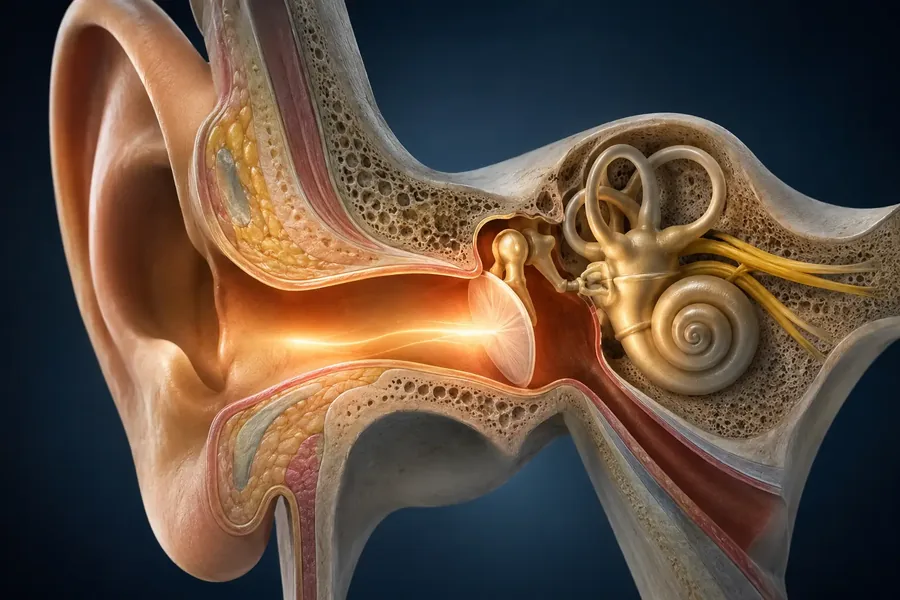
You treat a recurring ear infection with standard drops, yet the dampness remains. A sharp, foul odour begins to emanate from the ear canal. This smell signals something more complex than a simple bacterial infection. You might see a small, white mass deep behind the eardrum during a clinical exam. Medical professionals call this a “pearl” due to its appearance. However, this growth lacks the value of a gemstone. It represents a slow-moving threat to your hearing. Understanding what cholesteatoma is allows you to act before the growth destroys the delicate structures of your middle ear.
Also Read: Perforated Eardrum Treatment: Exploring Medical Patches and Advanced Eardrum Hole Surgery Options
1. What is a Cholesteatoma and How Does it Form?
- The cholesteatoma meaning identifies a non-cancerous, abnormal skin growth that develops in the middle ear space behind the eardrum.
- Skin cells in the ear canal normally migrate outward, but this condition involves skin that grows inward and becomes trapped.
- The cyst consists of layers of dead skin cells, specifically keratin, which continue to shed within the enclosed space.
- The growth functions as an aggressive invader because the skin produces enzymes that dissolve the surrounding bone of the ear.
- The middle ear provides a warm, moist environment that encourages the cyst to harbour resistant bacterial colonies.
- Clinicians distinguish this growth from other tumours because it does not spread to distant organs but causes severe local destruction.
- The white appearance comes from the high concentration of keratin protein packed into a tight, spherical pouch.
- As the cyst expands, it physically displaces healthy tissue and creates a path for chronic, recurring infections.
- The pressure of the expanding cyst creates biological tension that triggers the body to resorb its own bone.
The Primary Causes of Middle Ear Skin Growths
- Eustachian tube dysfunction represents one of the primary cholesteatoma causes by failing to equalise air pressure in the middle ear.
- A persistent vacuum effect in the ear pulls the thin eardrum inward, creating a deep pocket or retraction pouch.
- Dead skin cells collect in this retraction pocket rather than migrating out of the ear canal as they normally do.
- A ruptured or perforated eardrum acts as a gateway that allows skin from the outer ear to enter the middle ear space.
- Chronic middle ear infections cause repeated inflammation, which encourages skin cells to proliferate in areas where they do not belong.
- Congenital factors involve skin cells that become trapped behind the eardrum during foetal development before a child is born.
- Trauma to the ear, such as a skull fracture, physically displaces skin into the middle ear and triggers post-traumatic growth.
- The accumulation of keratin creates its own pressure, which forces the pocket to expand deeper into the mastoid bone.
- Previous ear surgeries occasionally leave behind microscopic skin fragments that eventually develop into an acquired cyst.
Common Symptoms of a Cholesteatoma Ear
- A cholesteatoma ear typically produces a persistent, foul-smelling discharge that varies in colour from clear to yellowish-green.
- Patients experience a constant feeling of “fullness” or pressure deep inside the ear that does not resolve with jaw movement.
- Conductive hearing loss occurs when the mass dampens the vibration of the eardrum or the tiny bones of the middle ear.
- Tinnitus, or a ringing sound in the ear, often accompanies the growth as it interferes with normal auditory signals.
- Dizziness or a spinning sensation (vertigo) indicates that the cyst irritates the balance organs of the inner ear.
- Pain in the ear or behind the ear suggests that a secondary infection exists or the growth puts pressure on nerves.
- Facial nerve weakness or drooping signifies that the growth compresses the nerve responsible for facial expressions.
- Children with the condition often present with a “clogged” ear that teachers or parents mistake for simple wax build-up.
- Persistent headaches on the affected side occur when the growth expands toward the skull base.
- A sudden change in hearing sensitivity often happens if the cyst causes the ossicular chain to disconnect.
Also Read: FESS Complications: Why Clinical Expertise Matters in Functional Endoscopic Sinus Surgery
How We Diagnose a Cholesteatoma at 3 Senses Clinic
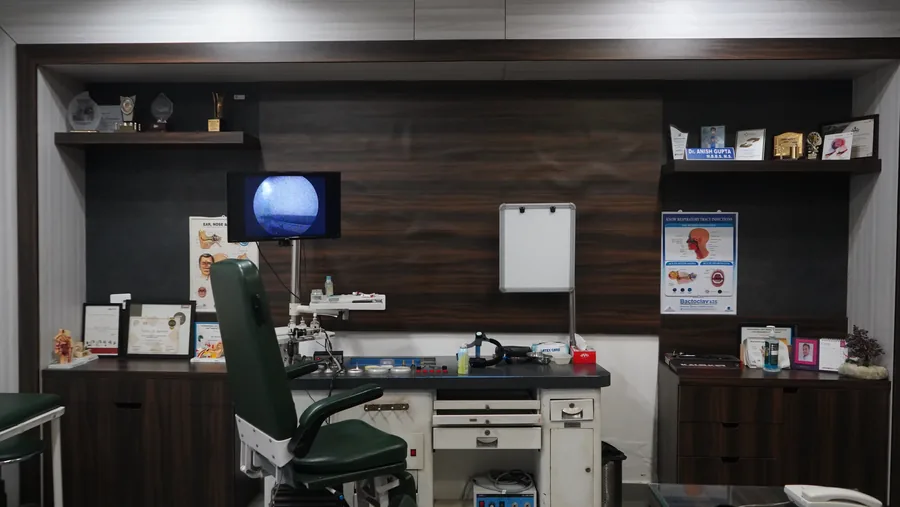
- Our ENT specialists use an otoscope or a high-definition microscope to examine the eardrum for retraction pockets or white masses.
- Audiometry tests measure the degree of hearing loss and determine which frequencies the patient perceives.
- Tympanometry assesses the mobility of the eardrum and the health of the middle ear pressure system.
- High-resolution CT scans provide a detailed view of the ear anatomy to check for bone erosion and the extent of the cyst.
- An MRI scan helps clinicians distinguish between a cholesteatoma and other types of inflammatory tissue or tumours.
- Diagnostic endoscopy allows our surgeons to see into deep recesses of the middle ear that a standard exam cannot reach.
- We review the patient’s history of childhood ear infections and previous surgeries to identify specific risk factors.
- The specialist examines the mastoid bone behind the ear for signs of tenderness or external swelling.
- Our team performs vestibular testing if the patient reports significant dizziness or balance issues.
Surgical Options for Cholesteatoma Treatment
- Surgery serves as the only definitive cholesteatoma treatment because the growth does not respond to ear drops or oral antibiotics.
- Our surgeons perform a mastoidectomy to clear the cyst and infected tissue from the honeycomb-like bone behind the ear.
- Tympanoplasty involves repairing the eardrum and reconstructing any damaged hearing bones using natural or synthetic grafts.
- The clinical team uses microsurgical instruments and high-power microscopes to ensure the total removal of every skin cell.
- A “canal wall down” procedure creates a common cavity in the ear to make future cleaning and monitoring easier.
- Intraoperative nerve monitoring protects the facial nerve while the surgeon clears diseased tissue from the surrounding area.
- The primary goal of surgery focuses on making the ear “safe” and “dry” to prevent life-threatening complications.
- Second-look procedures often occur six to twelve months later to ensure the cyst does not return in hidden areas.
- We use bone cement or prosthetic ossicles to restore the physical connection between the eardrum and the inner ear.
Potential Complications and Long-Term Ear Care
- Untreated growths eventually dissolve the hammer, anvil, and stirrup bones, which leads to permanent conductive hearing loss.
- The cyst can erode the lateral semicircular canal, which causes severe vertigo and permanent balance disorders.
- Erosion of the thin bone above the ear allows infections to reach the brain, causing meningitis or a brain abscess.
- Facial nerve paralysis occurs if the growth destroys the bony canal that protects the nerve as it passes through the ear.
- Recurrence represents a significant risk, as even a few remaining skin cells can regrow into a new cyst over time.
- Patients require regular debridement sessions in our clinic to remove skin debris and keep the surgical cavity clean.
- Ongoing audiology check-ups monitor the stability of the hearing reconstruction and the health of the inner ear.
- Water protection protocols, such as using custom earplugs, prevent infections in the newly reconstructed ear canal.
- We advise against air travel or scuba diving until the surgical site heals and the Eustachian tube functions properly.
- Regular microscopic examination allows us to detect and remove small pearls before they require major revision surgery.
Why Choose Our Specialist Ear Care in Gurgaon
- Our Gurgaon facility provides advanced diagnostic suites equipped with high-resolution endoscopy and microscopic imaging.
- We specialise in complex ear reconstructions and the surgical management of chronic middle ear disease.
- The 3 Senses Clinics team follows strict international sterile protocols to ensure safe and successful surgical outcomes.
- We use precision technology to reconstruct the ossicular chain and restore hearing function whenever clinically possible.
- Our surgeons focus on minimally invasive approaches to reduce recovery time and improve your post-operative comfort.
- The integrated care model at our centre addresses the infection, the growth, and the underlying pressure issues simultaneously.
- We offer a dedicated paediatric ENT department to manage congenital ear conditions in children with specialised care.
- Our clinic maintains long-term patient records to ensure consistent monitoring and prevention of disease recurrence.
Reclaim Your Health at 3 Senses Clinics
A persistent, smelly ear discharge is more than a nuisance; it is a clinical warning sign that requires immediate attention. Understanding the cholesteatoma meaning is the first step in stopping this growth from damaging your hearing. At 3 Senses ENT & Dental Clinic, our specialists combine microsurgical expertise with high-definition imaging to provide the definitive cholesteatoma treatment you need. We focus on clearing the disease and restoring the structural integrity of your ear. Do not wait for symptoms to worsen. Schedule your comprehensive ear assessment today at 3 Senses ENT & Dental Clinic and protect your hearing for the future. Contact our Gurgaon team at +918826262607 or email info@3sensesclinics.com to book your clinical evaluation.
Also Read: Tonsillectomy Surgery: When is Tonsil Removal Necessary for Children and Adults?
Frequently Asked Questions
1. What is cholesteatoma?
What a cholesteatoma is is a question many patients ask when they have chronic ear infections. It is a non-cancerous skin cyst that grows behind the eardrum. Over time, it collects dead skin cells and expands, which can destroy the tiny bones in your ear and cause hearing loss. It requires specialist medical attention to prevent serious complications.
2. What are the main cholesteatoma causes?
Common cholesteatoma causes include chronic ear infections and problems with the Eustachian tube. If the tube does not work correctly, it creates a vacuum that pulls the eardrum inward, forming a pocket. Skin cells get trapped in this pocket and grow into a cyst. Rarely, some children are born with the condition.
3. How do you treat a cholesteatoma in the ear?
The only effective cholesteatoma treatment is surgery. Antibiotics can treat the infection, but they cannot remove the skin growth. Surgeons perform a mastoidectomy and tympanoplasty to remove the cyst and repair the eardrum. This prevents the growth from damaging your hearing or spreading toward your brain.
4. Can a cholesteatoma return after surgery?
Yes, a cholesteatoma can recur if even a few skin cells remain after surgery. This is why we provide long-term follow-up care. Regular ear cleanings and occasional imaging help us ensure the growth does not return. If it does, we can usually manage it with a minor procedure before it causes damage.